¡Esta entrada no podía faltar! Y es que después de la pedazo de Nochevieja que viví en Sídney el pasado 2016, ahora me tocaba vivir una experiencia verdaderamente diferente.
This post couldn’t be missing! After the great New Year’s Eve I had in Sydney last 2016, now it was time to live such a different experience.

Lo que he aprendido este año es que el Año Nuevo será lo que tú quieras que sea. Y es que en Japón, pese a las miles de tradiciones que tiene, cada familia es un mundo y seguirá una, otra o ninguna. Así que antes de compartir con vosotros qué hice yo por Año Nuevo… ¡Os quiero contar las principales tradiciones con las que se celebra aquí el Año Nuevo!
I’ve learnt that New Year’s will be whatever you want it to be. In Japan, despite having thousands of traditions here, each family is different and they may follow one tradition, a different one, or none. And before telling you what I did for New Year… I want to share with you the main traditions to celebrate New Year in Japan!
1. La visita al templo / Visiting the temple
Desde que decidí venir a Japón, siempre leí y escuché que, en el día de Año Nuevo, es tradición ir al templo sintoísta para rezar y descubrir cuál será tu fortuna para el año entrante. Así que, aunque sea un plan tranquilito, es una tradición cultural bastante bonita, ya que se trata de un día en compañía, ¡y al aire libre!
Since I decided to come to Japan, I always read and heard that, on New Year’s Day, it is traditional to go to the shinto shrine or buddhist temple to pray and receive your fortune for this year. Even though it is a relaxing plan rather than party one, it is a very beautiful tradition as you can experience it with the people you love, and it’s outdoors!
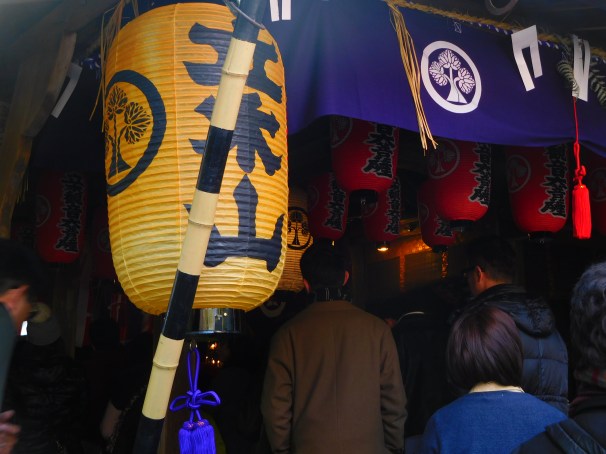
¿Y cómo descubres la fortuna que te traerá este 2018? Pues para ello has de pagar entre 100 y 200 ¥ (entre 75 cént. y 1,5 €) según el templo, y recibirás al azar un papelito (omikuji) que te dirá si tendrás la mejor de las fortunas, buena fortuna, intermedia, mala… ¡O la peor de todas!
And how do you guess the fortune you’ll have for this 2018? You pay between 100 and 200 ¥ (between 75 cents and 1.5 €) according to the shrine. And, after getting a random number, you’ll receive the piece of paper (omikuji) assigned to that number. That paper will tell you if you’ll have the best of all fortunes, a good one, a medium one, a bad one… Or the worst of all!
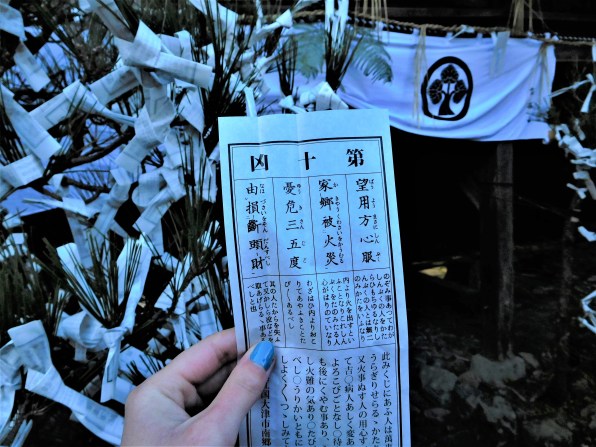
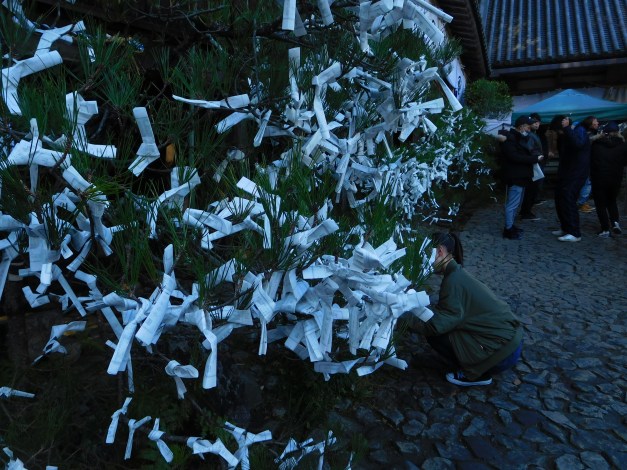
Pero en el caso de que tu fortuna no sea la mejor, ¡no pasa nada! Como estamos seguros de que afrontaremos cualquier obstáculo en la vida y de que así le plantaremos cara al destino, atamos el papelito a unas varas o a unos arbolitos que encontrarás justo al lado para así disipar la mala suerte y seguir buscando la mejor de todas. La verdad es que, personalmente, le da un toque muy bonito al templo y que, de ser algo más espiritual que turístico, sería más bonito aún.
However, in case you don’t receive the best one, don’t worry! As we’re certain we’ll face our destiny and any obstacle in our lives, we tie the piece of paper to a tree next to us, and we’re ready to keep on seeking our best luck! Personally, this is very beautiful to see and, if it were more spiritual rather than touristy, it’d be even more beautiful!
Por otro lado, también podemos celebrar la despedida del año en los templos budistas. En muchos de ellos, los monjes tocan 108 campanadas con las que reciben el Año Nuevo. Además, suelen dejar a los primeros cientos visitantes que ellos mismos toquen la campana como rezo para el año entrante.
On the other hand, we can also celebrate the New Year’s Eve in buddhist temples. In many of them, monks ring the huge bell 108 times to receive the new year. In addition, they usually let the first hundreds of visitors ring the bell themselves as a first prayer of the year.
Sin embargo, como los japoneses no es que sean especialmente devotos de los templos ni de ninguna religión, no sé si esta se trata de una tradición que siga un gran porcentaje del país (aunque los templos principales igualmente están llenos de gente). Lo que sí estoy segura es que lo de visitar los templos durante los primeros días del año sí que se cumple en la gran mayoría de familias japonesas. ¡Merece la pena!
However, as Japanese people are not specially religious, I don’t know if this is a tradition many people follow (‘though the main temples were full of people). What I am completely sure is that visiting the temple or shrine during the first days of the year is without a doubt a tradition most of the Japanese families follow. It’s worth it!
2. La limpieza de la casa / Cleaning the house
Sí, aunque suene a que se me ha colado esto aquí… He de decir que esta sí que es la tradición que siguen todas las familias: limpiar la casa el día de Nochevieja.
Yes, even though this may sounds like this doesn’t match with New Year’s Eve… I must say this is the tradition every family follows in Japan: cleaning the house on New Year’s Eve.
¡Ya sé que en España muchos estaréis llevándoos las manos a la cabeza! La primera vez que lo escuché aquí (y no tenía ni idea de que se hacía esto) fue la de: «Ok, Elena, reacciona como que es normal, al fin y al cabo hay que limpiar la casa todas las semanas… No sé, ¿tan raro suena?»
I know in Spain, Australia, South America or wherever, most of you will be shocked! When I first heard of that I told myself: «Ok, Elena, react as if it was normal, anyway everyone has to clean the house every week… Idk, does it sound that strange?»
Pero luego me iba dando cuenta de que limpiar no se trata nunca de un evento festivo particular, sino de simplemente una tarea más que hay que hacer, y que nada encaja con nuestra imagen de «diversión y relax» que tenemos de la Nochevieja. Así que, cuando fui verdaderamente consciente de que esto se trataba de una tradición en sí, mi pensamiento cambió a: «Vaya, en cuanto les cuente esto a los que están en España jamás lo creerán, jamás lo harían, ¡y tal vez hasta se rían!».
But then I was becoming more and more aware that cleaning is never a festive event, but just another housework you have to do. Therefore, it doesn’t match at all our image of «having fun and relaxing» that we have of New Year’s Eve. So when I realized of that, my mind changed to: «Wow, when I say this to those ones living abroad, they will never believe me!»
Porque, en España, ese día ya estamos bastante ocupados comprando lo último que falta para la cena de Nochevieja, cocinando desde temprano, descansando para estar bien activos en la noche que nos vamos a pegar, vistiéndonos y maquillándonos, etc. ¡Por algo estamos de vacaciones! Y por ello hay que aprovecharlas al máximo simplemente disfrutándolas. ¡Para limpiar ya tenemos cualquier otro finde común! (Desde aquí aprovecho para mandar mucho ánimo a los universitarios que no tienen todas las vacaciones para disfrutar, menos mal que yo eso ya lo he pasado, ¡pero os comprendo!).
Because, at least in Spain, that day we are already too busy buying the ultimate things we need for New Year’s Eve dinner, cooking from early in the day, resting for being awake enough until the sunrise, getting dressed and putting our makeup on… That’s why we are on holidays! To make the most of them and simply enjoying every minute! (Except for university students… I am sorry for you guys, good luck studying for your exams!!!) For cleaning, we already have every other weekend through the year!
Aún así, y aunque tal vez os parezca incomprensible, limpiar la casa tiene su sentido. Y es que recibir el Año Nuevo con la casa limpita es sinónimo de dejar atrás todo lo que te sobra y ensucia. Así pues, lo entiendo como dar la bienvenida a una nueva etapa estando más libres de negatividad en todos los sentidos. No sé, tal vez soy demasiado poética, pero la verdad es que lo pillé rápido y me gustó mucho la idea (como idea eh, la realidad ya es otra cosa, jaja).
Nevertheless, and even though it may seem unbelievable for us, cleaning the house this day make sense. The reason is that receiving the new year with a clean house is a synonym of leaving behind everything which is unnecessary or dirty. It’s like welcoming a new phase of our lives being free of negativity in every sense. I don’t know, maybe I am too poetic, but the truth is I understood it very quickly and I liked the idea (but just as an idea, eh, as a reality that’s quite different… haha).
De todas formas, como es lógico, luego ya todo dependerá de cada familia cómo lo viva: de si es limpiar por limpiar, limpiar para luego decorar la casa (¡anda que no estaría bien eso!), tirar todas esas cosas que sobran (¡que anda que no acumulan cachivaches los japoneses!)… Vamos, todo lo que yo suelo hacer cuando cierro una etapa en mi vida (Secundaria, Bachillerato, Universidad…), solo que ellos lo convierten en el mayor (y a veces el único) evento de celebración del Año Nuevo.
Anyway, every family will apply this tradition to their New Year’s Eve, obviously, in a different way: some of them may clean just as any other cleaning day, some may clean and then decorate the house (this would be the best among all!), some may throw away all that unnecessary stuff (Japanese people have a gene for accumulating more and more things!)… Well, everything I usually do when I finish a period in my life (such as Junior High, High School, University…), ‘though they make this cleaning task into the biggest (and sometimes the only) celebration event for the New Year’s Eve.
3. Las primeras comidas del año / The first meals of the year
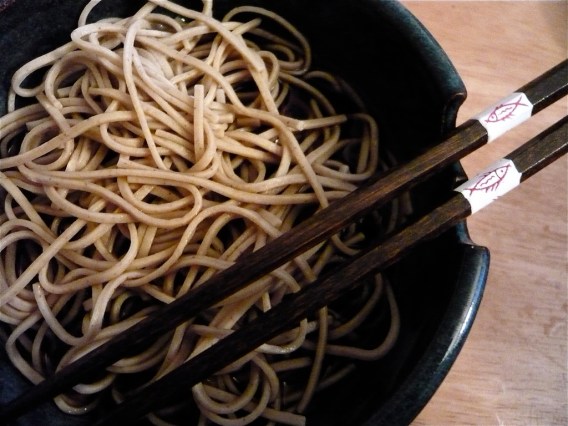
Muchas familias cenan soba en Nochevieja, ya que estos fideos, con su longitud, representan la larga vida que se desea que tengas. Y, bueno, teniendo en cuenta que Japón es el país con la esperanza de vida más alta del mundo (seguido de España, por cierto), ¡tiene sentido!
Many families eat soba for dinner on New Year’s Eve, as these noodles, because of their length, represent the long life we hope we’ll have. It’s such a meaningful tradition as Japan is the country with the highest life expectancy in the world (followed by Spain, btw)!
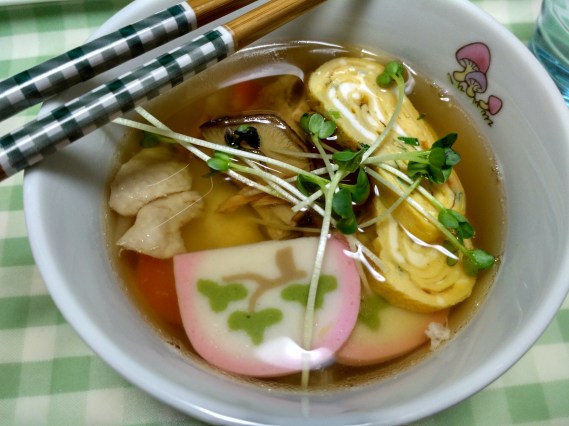
También es típico desayunar el 1 de enero zōni, una sopa con verduras, huevo, carne, pescado y mochi (el dulce de arroz típico de Japón). Vamos, ¡que tiene de todo! Y es que cada alimento tiene su significado, haciendo que la entrada al año nuevo sea tan completa como tu desayuno.
It is also very traditional to have zōni as the first breakfast of the year, on January 1st. Zōni is a soup with vegetables, egg, meat, fish and mochi (the typical Japanese sweet made of rice). In other words, it has everything! And this is because each food has its meaning, making the entrance into this year as complete as your breakfast!
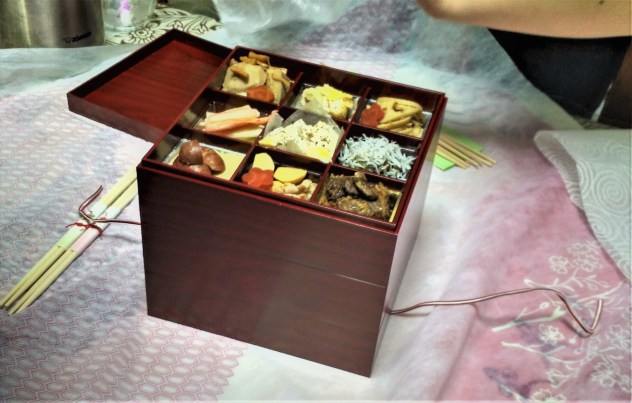
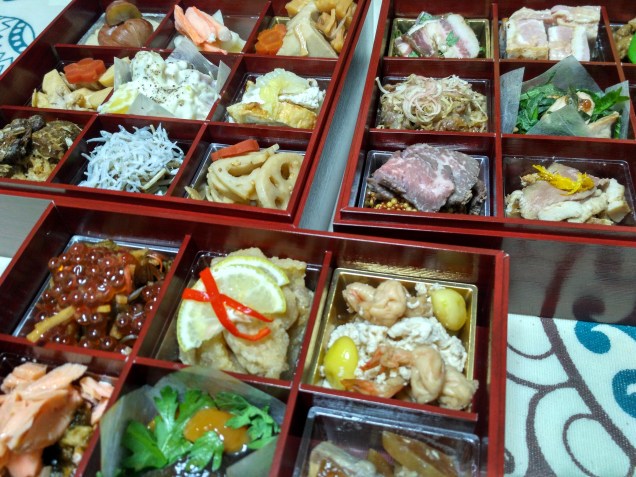
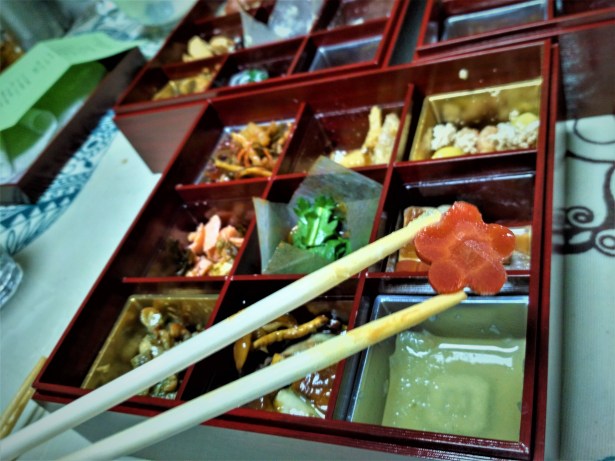
Y para el primer almuerzo del año, ¡el osechi ryōri! Este plato se trata de una caja de madera de varios pisos con pequeñas muestras de distintos platos. Esta es una comida de alta calidad con la que los japoneses dan la bienvenida al año nuevo, ya que además de que está riquísima y posee unos sabores realmente únicos, también cuesta lo suyo (mínimo 10 000 yenes aprox. = unos 75 €).
And for the first lunch of the year, we have the osechi ryōri! This food consists on a wooden box with several floors of many little samples of different foods. This is a high quality food with which Japanese families welcome the new year. It is delicious and it has very unique flavours! However, it is quite expensive… Each «floor» costs a minimum of 10 000 ¥ (a minimum of 75 € / 115 AUD)!
4. Las felicitaciones de Año Nuevo
Aquí no se lleva lo de esperar con ansia las 0:00 h de la noche para levantarte, abrazar y besar a tus familiares y amigos, gritar ¡FELIZ AÑO NUEVO!, armar jaleo, cantar, reír, etc… ¡Esto es Japón! Así que a veces ni escucharás felicitaciones de Año Nuevo, y mucho menos verás besos y abrazos. La gente sigue como si nada. Es un día «especial», sí, pero podríamos decir que se sigue como un día normal, al menos aparentemente y desde el punto de vista español.
Here it’s not trendy to be looking forward to 0:00 am to stand up, hug and kiss your relatives and friends, shout HAPPY NEW YEAR!, have fun noisily (or without being noisy), sing, laugh… This is Japan! Here you may not even hear sometimes «Happy New Year» from the people around you, and definitely you will never see kisses and hugs. People keep on like nothing had happened. It is a special day, it is, but we could say they continue as if it was a normal day, at least apparently and from a Spanish point of view.
Por otra parte, también es verdad que parece que sienten que el Año Nuevo es más el día 1 de enero (con eso de que desayunan zōni y almuerzan el osechi ryōri en familia; aunque no como un evento familiar tan a lo grande como el nuestro) que el 31 de diciembre o la Nochevieja. Lo que pasa es que nosotros empezamos a celebrar la entrada del 1 de enero desde las ¡¡0:00 h!! ¡No podemos esperar!
On the other hand, it’s true it seems they feel more the new year the January 1st (reason why they have, the family together, zōni for breakfast and osechi ryōri for lunch) rather than December 31st or New Year’s Eve. And it doesn’t seem to be such a big family event as it is for us. For us, we cannot wait to celebrate the new year with as many beloved people as possible from the very beginning of the year: January 1st at 0:00 h!!!
Entonces, como no se expresa mucho amor en el ambiente, se mandan tarjetas de felicitación del Año Nuevo que, curiosamente, los empleados de correos las acumulan en sus oficinas postales hasta que llega el 1 de enero, y entonces ese día es cuando las entregan. ¡Así ninguna llega antes de tiempo!
Consequently, as there is not much love in the air (nothing at all), they have the tradition of sending New Year’s greetings cards that, interestingly, the post office employees keep there until it is January 1st. Then, they deliver the greetings cards all together so none of them arrives when it’s not New Year yet!
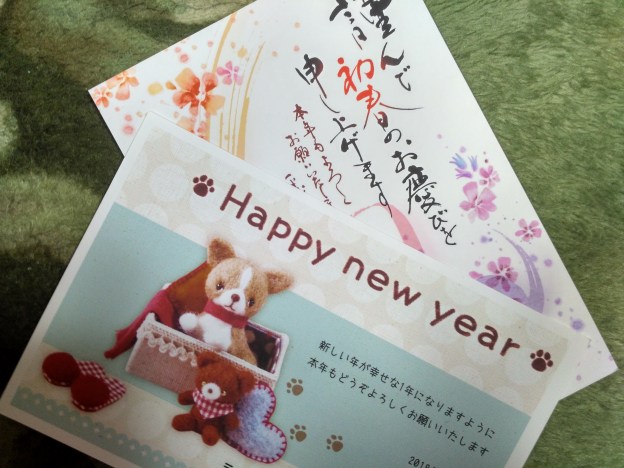
Como es de esperar, la mayoría de ellas (estilo los christmas o felicitaciones de Navidad que también nos llegan a nosotros cada año) son de temas de trabajo o de empresas a las que sueles acudir (dentistas, etc), típicas que te llegan por compromiso y tal. Pero también las hay, y serán las más importantes, claro, de familiares.
As we can expect, many of them are from work issues or companies you usually attend to (dentist, for instance). But they have as well (and I guess they’re much more important) the ones from your family members. These greetings cards are, therefore, as the Christmas cards we get at Christmas.
Cada uno las personaliza como quiere y muchas de ellas vienen con un diseño del animal correspondiente a este año. Como el 2018 es el año del perro, ¡muchas de las felicitaciones vienen con perritos dibujados!
Every greetings card is personalised and many of them have a design of the corresponding animal to this year. As 2018 is the year of the dog, many of the cards have drawings of dogs!
¿Cómo celebré yo el Año Nuevo? / How did I celebrate New Year’s?
Pues… Como ya se podía prever… Bueno… Cuesta decirlo pero… Limp… Bueno, que eso, ¡cogiendo la aspiradora y la mopa!
So… As I could predict… Well… It’s hard to tell, but… Clea… Well, that’s it! Vacuuming and mopping!
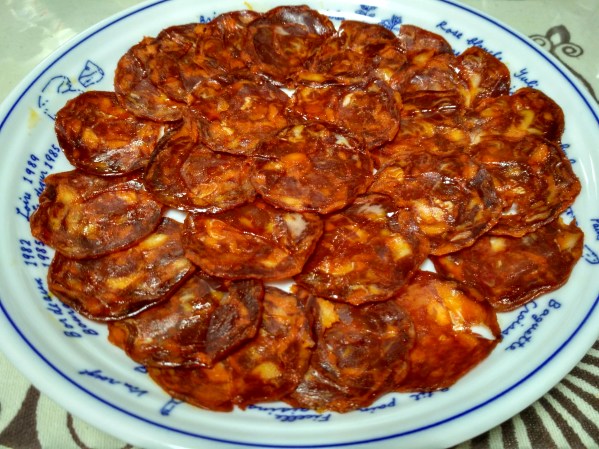
Así es mi inmersión cultural. ¡Es lo que toca! Y por la noche, abrí el turrón que me traje, y gracias a ello me pude sentir en España por unos segundos (y en la «comida de Año Nuevo» que tuve el día 2 de enero, el chorizo).
This is how culturally immersed I am. It’s time for this! At least, at night I opened the turrón I brought from Spain and thanks to it I felt like in Spain for a few seconds. Furthermore, I opened the chorizo on January 2st as a «New Year’s lunch».
Luego fuimos a un concierto de San Silvestre de música clásica, donde pasé la transición del año. Estuvo muy bien, aunque es raro cambiar la idea de cotillón por la de una música tan relajada… ¡Al menos así pude arreglarme un poco! ¡Porque la gente aquí para Nochevieja no se viste elegante en absoluto!
Then we went to a Silvester Concert of classical music, where I spend the transition of the year. It was good, though it is strange to listen to such a different music from the party one we usually listen to on New Year’s Eve! At least, I could dress a bit better! People here don’t dress elegant at all on New Year(‘s Eve) as we always do!
Al día siguiente (el día 1 de enero), tuve el zōni para desayunar y el osechi para comer. Y el resto del día, ¡de relax y en contacto con España, como debe ser!
The following day, January 1st, I had zoni for breakfast and osechi for lunch. And the rest of the day, relax and keeping in contact with Spain, as always! 🙂
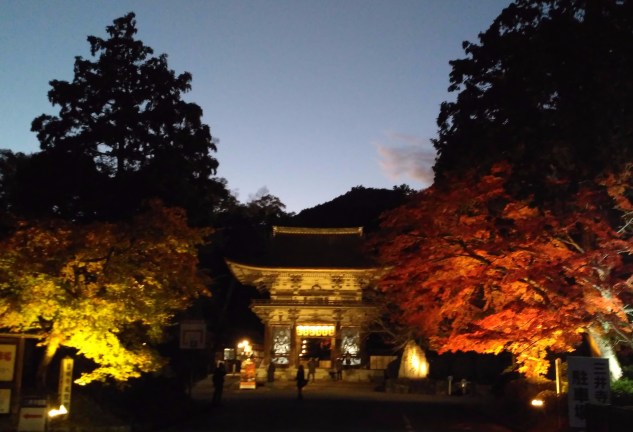
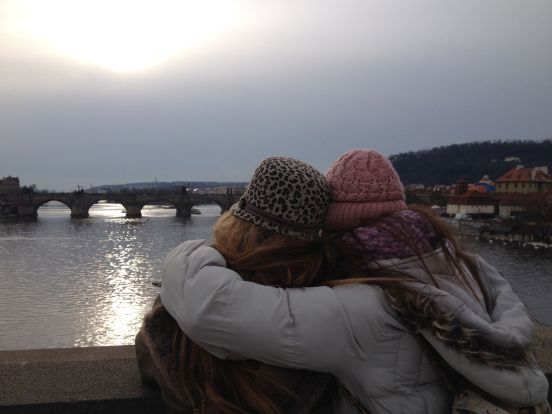
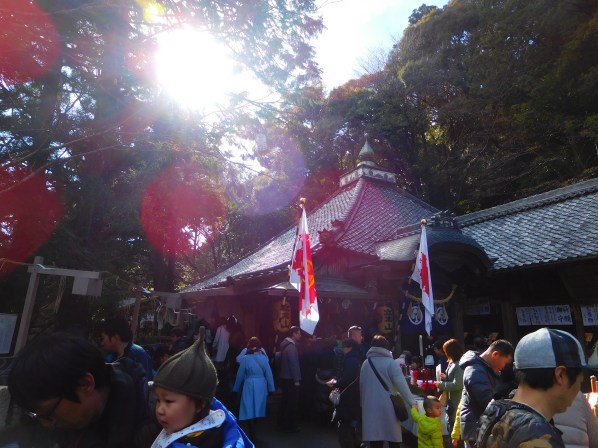
Y por último, visité el 3 de enero un templo budista en lo alto de una montaña (el de las fotos en el apartado relativo a los templos) para pedir por un buen año y averiguar la suerte que tendré como si de un horóscopo se tratara. Como ya os adelanté, se supone que mi suerte fue la peor de todas, ¡así que la dejé atadita al árbol (la lié mientras tanto haciendo caer otra que ya estaba atada, estas cosas solo me pasan a mí)!
Finally, I visited the January 3rd a buddhist temple on the top of a mountain to pray for a good year and guess my fortune… As I already said, I got the worst fortune! So I tied my piece of paper to a tree there! I am glad I am not superstitious…
¿Y las Navidades? / And what about Christmas?
Ya que estoy, también lo comento. Mucha gente me ha preguntado por la Navidad aquí, muchos me habéis dicho que tiene que ser súper bonita… ¡Pero la realidad es que no hay Navidad! Y, bueno, se podría entender, porque este no es un país de tradición católica. En todo caso, lo que sí es cierto es que decoran los centros comerciales y las calles principales de las ciudades más grandes… Pero poco más (en la gran mayoría de las casas no ponen ni árbol de Navidad ni nada). Y yo me aferraba a ello, jaja, ¡qué remedio!
Many people have asked me about Christmas here. Actually, many of you have told me it should be very beautiful! But the truth is… There is no Christmas here! Well, this is understandable as this is not a traditionally catholic country. Nevertheless, they do decorate the shopping malls and the main streets from the main cities… But that’s all. And that’s what I tried to feel as Christmas!


En cuanto a los regalos, aquí existe Papá Noel, aunque en la versión japonesa llamada Santa-san 😛 Sin embargo… La magia dura poco. Santa-san solo le trae regalos a los niños, así que conforme te vas haciendo mayor, la magia desaparece… Y solo quedan los anuncios en la televisión para atraer a los 127 millones de japoneses a cenar por Nochebuena en el KFC. Sí, en el KFC: Kentucky Fried Chicken. ¡Adiós a la calidad y la elegancia que nosotros entendemos por Navidad! Obviamente, yo no fui allí, jaja.
About the Christmas presents, there is Santa here, in a Japanese version, called Santa-san! However, magic lasts too little. Santa-san only brings presents to the kids, so, while you get older, the magic disappears! And the only thing left is the TV commercials from KFC for attracting the 127 millions of Japanese to have dinner there on Christmas’ Eve. Yes, Christmas dinner at KFC. Kentucky Fried Chicken. No way! Obviously, I didn’t go there! What happened with our elegance for Christmas?
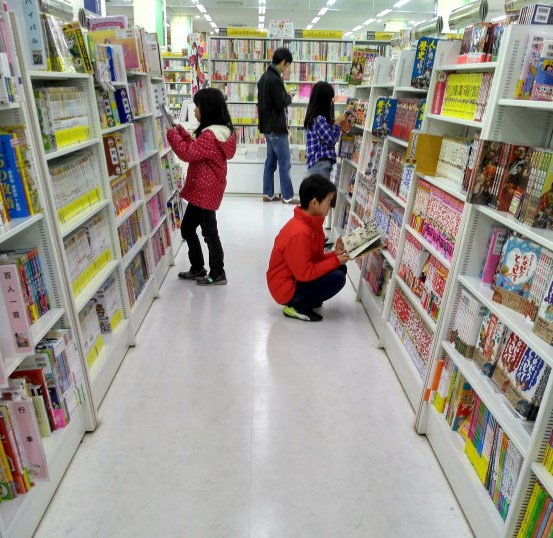
Por otro lado, sí que hay gente que hace regalos por Navidad, y habrá gente que hasta la celebre de algún modo y decore la casa, pero son los menos, y probablemente movidos por el espíritu capitalista y de postureo. Además, el 25 de diciembre aquí no es fiesta, ¡es día de trabajo! Así que tiene su lógica.
On the other hand, there are some people who buy presents for Christmas, and I am sure there will be some people who celebrate Christmas somehow and decorate a bit their house… But this is a minority and probably influenced by the American trends. Besides, December 25th is not holiday here, it is a working day! So it makes sense Christmas is just another day.
Y con todo esto… / To conclude…
¡Os deseo a todos un gran año 2018, ¡lleno de salud y amistad! / I wish you all a great 2018, health and friendship!
Muchas gracias a todos aquellos que se acordaron de mí y me desearon lo mejor. Y especial mención a aquella conexión Sevilla-Shiga que me hicieron sentir la verdadera celebración del Año Nuevo desde las 2 a las 3 de la madrugada (¡y por mí hubiera sido la madrugada entera si no fuera porque aquí la gente no trasnocha y demasiado estaba disfrutando yo ya!)
Thanks very much to all of you who remembered me these days and wished me all the best. And a special mention to the Seville-Shiga connection!
じゃ, またね! Ja, mate ne! ¡Hasta pronto! See ya! 🙂
明けましておめでとうございます!Akemashite omedetō gozaimasu!
¡Feliz Año Nuevo! Happy New Year!

Quizás también te interese:
5 cosas que no sabía de Japón / 5 things I didn’t know about Japan
Otoño en Japón / Autumn in Japan
Japan Working Holiday (II): Cómo abrir una cuenta bancaria en Japón / How to open a bank account in Japan being a foreigner
 MI PROPIO ÍTACA