Si estás en Japón con un visado Working Holiday o cualquier otro visado con el que te den una Residence Card al llegar al aeropuerto… ¡Sabrás de lo que te hablo!
If you are in Japan with a Working Holiday visa or any other visa with which you are given a Residence Card when you arrive in Japan at the airport… Then you know what I am talking about!

Como te habrán contado, al menos con el visado Working Holiday, dispones de 14 días para ir al ayuntamiento de la ciudad donde estés viviendo y registrarte.
As you may be already told, you have -at least with the Working Holiday visa- 14 days to go to the city hall and register.
¿Cómo se hace eso? / How to do that?
1. Infórmate de cuál es el ayuntamiento correspondiente a la ciudad en la que estás viviendo. / Ask which city hall is the one from the city where you are staying.
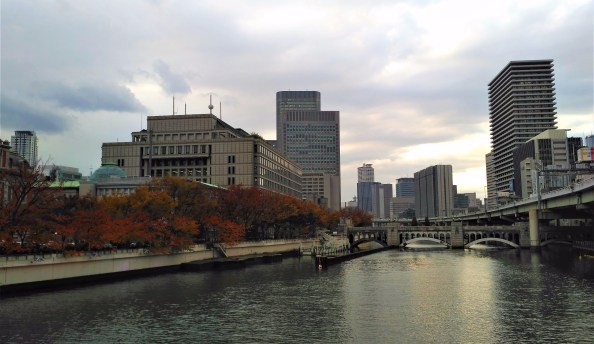
No importa que aún no tengas una residencia fija. Si estás de viaje y te estás quedando en un hostal en Kyoto, antes de que se te acabe el plazo de los 14 días, ve al ayuntamiento para decir que estás viviendo allí.
No matter that you don’t have a permanent accommodation yet. If you are travelling and you are staying in some hostel in Kyoto, go to the city hall within those 14 days just to inform you are living there.
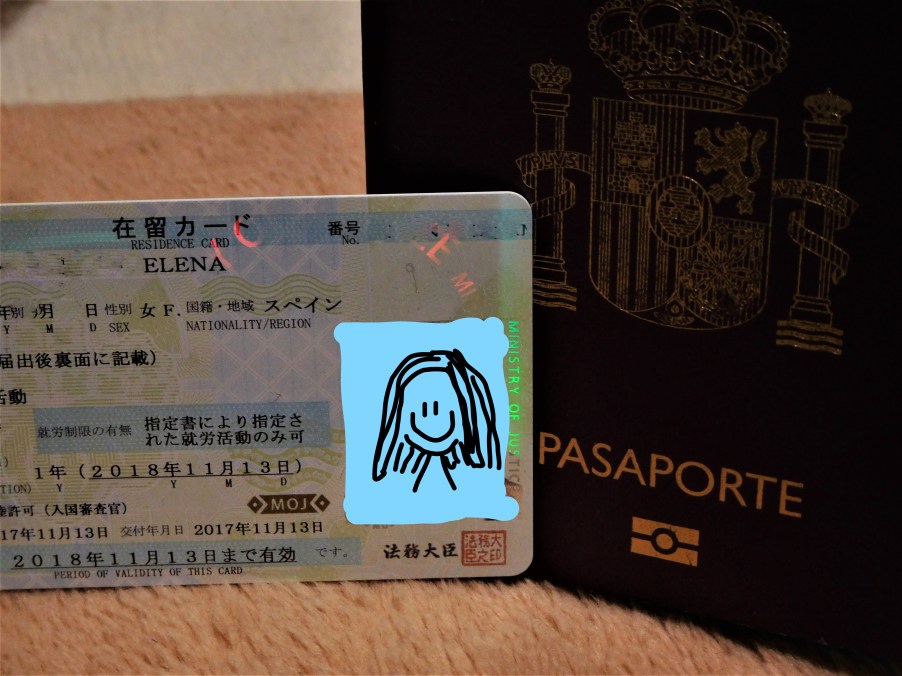
2. Una vez en el ayuntamiento, tendrás que mostrar tu pasaporte y la Residence Card que te dieron en el aeropuerto. / Once in the city hall, you’ll have to show your passport and the Residence Card you got at the airport.
¡Así que no se te olvide llevarlos contigo!
So don’t forget to take them with you!
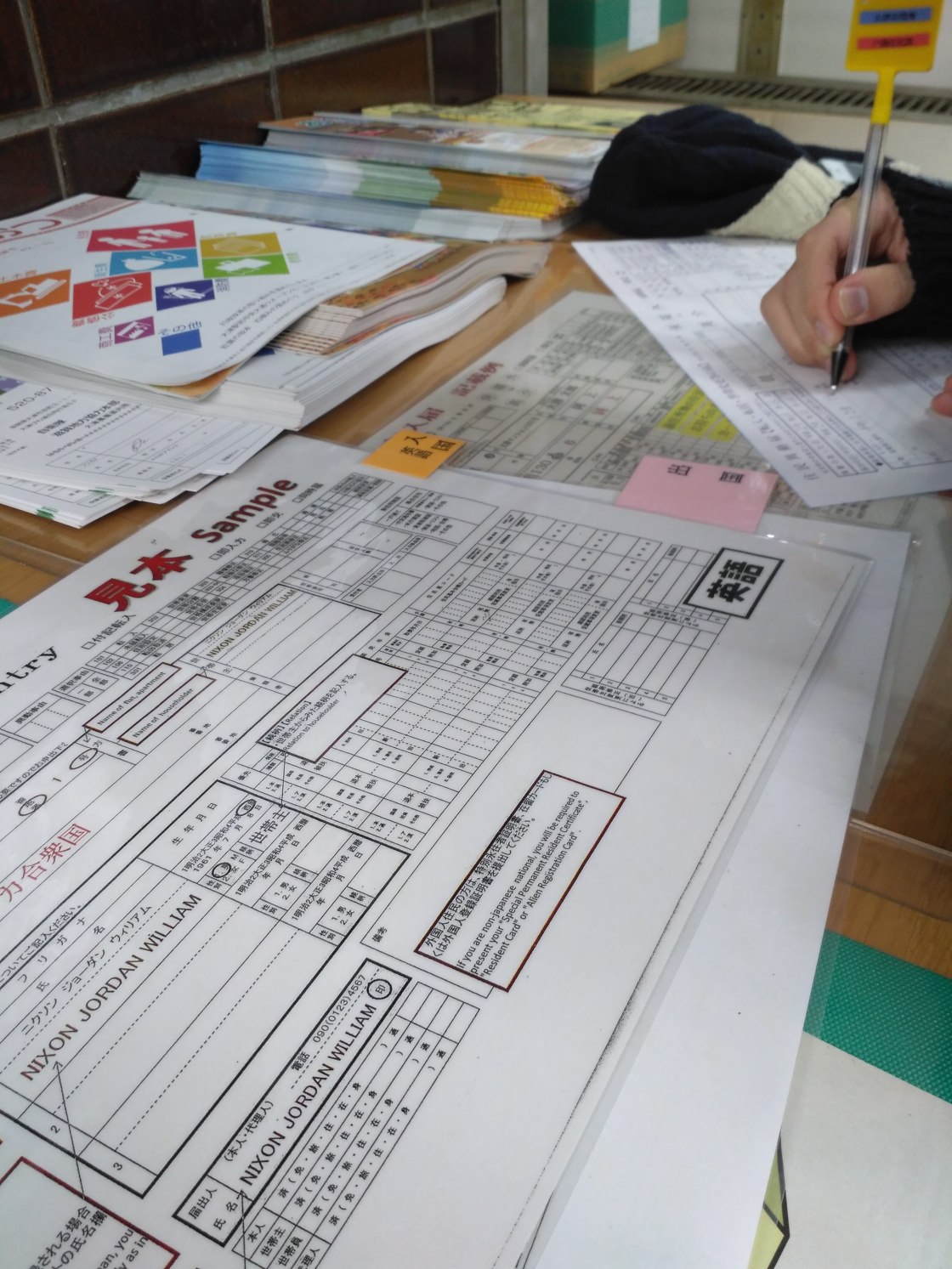
3. Te darán un papel (como el que te enseño en la foto de abajo) para rellenarlo. / You’ll have to fill out a paper that they’ll hand out to you (photo below).
Nombre, apellidos, fecha de nacimiento, fecha de llegada a Japón, dirección de donde te estás quedando, nombre del dueño del alojamiento, número de personas viviendo allí, etc.
Full name, date of birth, date of arrival in Japan, current address where you are staying, name of the householder, number of people living there, etc.
Aquí te voy a comentar dos cosas importantes…
Here I am gonna tell you two important things…
3.1. El papel tienes que rellenarlo EN JAPONÉS. Así que ojalá sepas japones, jaja.
You have to fill it out IN JAPANESE. So, I hope you can read and write Japanese XD.
Si no, no te preocupes, ¡por algo eres extranjero! Los funcionarios en Japón son muuuy simpáticos así que estoy segura de que te ayudarán sin problema y de que tal vez alguno te haría el favor de escribirlo.
Otherwise, don’t worry! That’s why you are a foreigner! Luckily, workers in Japan are reaaaally friendly so I am sure they will help you with no problems. Perhaps one of them will fill it out for you, who knows!
Y si no, ¿tienes algún amigo/a japonés? ¡También puedes ir con él/ella para que lo rellene por ti! O incluso llevarte el papel contigo, rellenarlo tranquilamente en casa (sobre todo si es con ayuda de alguien que sepa japonés que no haya podido ir contigo) y luego volver otro día (obviamente, dentro del plazo de 14 días) para entregarlo tú mismo.
Or do you have any Japanese friend? You can also ask him/her to fill it out for you! Or you can even take that paper with you, fill it out at home (specially if you can get there some help from a Japanese friend) and then go back to the city hall another day (within those 14 days) to hand it out.
3.2. Cuando pongas el nombre del dueño de la casa en la que te estés quedando, probablemente te pregunten (como me pasó a mí): «¿Quién es esta persona? ¿Ha venido aquí [al ayuntamiento] contigo?» / When you write down the name of your accommodation householder (at least if you stay in someone’s house), they will probably ask you: «Who is this person? Is she/he here [the city hall] with you?»
Si no está contigo… Entonces te van a pedir que traigas una autorización de su parte en la que diga básicamente que puedes quedarte en su casa.
If she or he is not with you… Then they will ask you to bring a written authorisation from the householder basically saying that you can stay in their house.
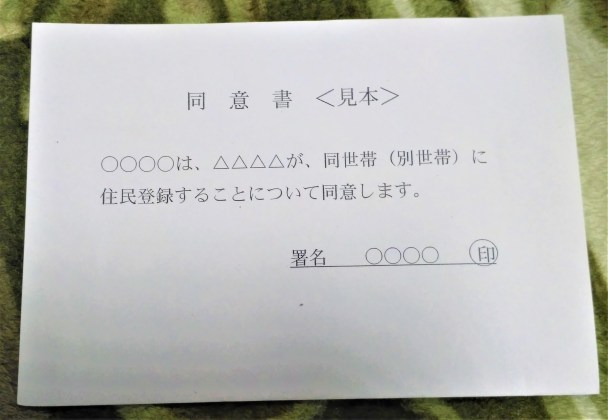
Esa autorización (escrita en japonés, por supuesto) tendría que ser del estilo:
This authorisation (written in Japanese, of course) should be sort of this:
«Yo, ______, autorizo a ______ a residir en mi casa. Firmado, ______.»
Y su firma con su sellito (del que hablo aquí).«Me, ______, I authorise ______ to stay in my house. Signed, ______. «
And, as a signature, the Japanese seal (I explain about it here).
4. Una vez que entregas el papel relleno (y la autorización en caso de necesitarla), procederán a grabarte en tu Residence Card la dirección que les has dado. / Once you hand out the paper filled out (and the authorisation in case you need it), they will engrave on your Residence Card the address you provided.
Cada vez que te mudes, tendrás que volver al ayuntamiento para avisar de que ya no vas a vivir allí y luego ir al de la ciudad a la que te mudas y hacer el mismo proceso. Si eres de los que te vas a estar moviendo sin parar, ¡mucho ánimo!
Every time you change accommodation, you’ll need to go back to the city hall and inform that you are no longer living there. After that, you shall go to the city hall from the city you are moving to, and filling out the same paper as you had to in the previous city hall. If you are planning to move a lot, がんばって (good luck)!

El seguro médico / Health insurance
(保険 Hoken)
En cuanto al seguro médico, a mí me dijeron que era obligatorio tener uno. Me dijeron, de hecho, que me tenía que apuntar al seguro médico nacional japonés, que es como la seguridad social en España, solo que privada. Se llama Kokumin-Kenko-Hoken, por si te lo mencionan allí en el ayuntamiento.
Regarding the health insurance, I was told it is compulsory to have one. In fact, I was told I had to sign up for the national Japanese health insurance (Kokumin-Kenko-Hoken), which is a private insurance. You may be asked at the city hall.
Pero si quieres llevar uno privado desde España o desde tu país (es lo que he hecho yo), en principio, parece que no hay problema. Cuando te pregunten por él, tu di simplemente que ya tienes uno privado desde España. De hecho, a mí me lo pidieron y me lo escanearon y todo para tenerlo junto con los demás datos sobre mí. Como recomendación, en mi caso me cogí el seguro médico para Working Holiday de Chapka. Y, aunque afortunadamente no he tenido que usar ni este ni el otro seguro, me dio muy buena pinta porque estaba especializado en Working Holiday y cubría por un buen precio todo lo que yo quería.
However, if you want to sign up for a private one from your own country (that’s what I’ve done), it seems there is no problem. Once the ask you about it, just say you already have a private one from your country. They asked me mine and they scanned it. In case you wanna have one too (if you’re European), I got Chapka’s Working Holiday insurance. Fortunately, I have never found myself in need of using it but it’s specialised in Working Holiday and it covered everything I wanted it to.
Y es que, ya sea de Japón o de tu país, es MUY IMPORTANTE tener un seguro médico, ya que si por cualquier cosa tienes que ir al médico… Bueno, no creo que tengas miles de euros para desembolsar así de pronto. El tener un seguro te garantiza que tú pagarás solo una mínima parte de ello (el 30% en caso del seguro nacional japonés).
No matter your insurance is from Japan or from your country, it is VERY IMPORTANT to have a health insurance. If you ever need to visit the doctor… Well, I guess you won’t have thousands of euros/dollars to provide in a sudden. Having a health insurance guarantees that you’ll only pay a minimum percentage of it (around 30% in case of the Japanese health insurance).
¿Funciona esto así en todos los ayuntamientos? / Does it work like this in every city hall?
Todo esto que os estoy contando es mi experiencia personal pero, al igual que a mi me pidieron tanto la autorización del amigo con el que me estaba quedando en casa, como el seguro médico, conozco otra gente a la que no le pidieron nada de ello. Osea, que será todo cuestión de cada funcionario o de la cara que le vean a cada uno, jaja.
This is only my personal experience. I was asked for both the authorisation from my householder and the health insurance; while other people that I know weren’t asked about any of them at all. Thus, I guess this may depend on each worker or each city.
Igualmente, lo del papel que tienes que rellenar y lo de llevar tu Residence Card y tu pasaporte sí será así en todos los ayuntamientos. Tú vas allí y buscas o dices las palabras «konnichiwa, registration, working holiday», y ya sabrán cómo atenderte, se supone 🙂
Anyway, what I am sure it will be common in every city hall it is that you have to bring your Residence Card and passport with you, and to fill out that paper. Just go there and say «konnichiwa, registration, working holiday», and they will know how to assist you, I guess 🙂
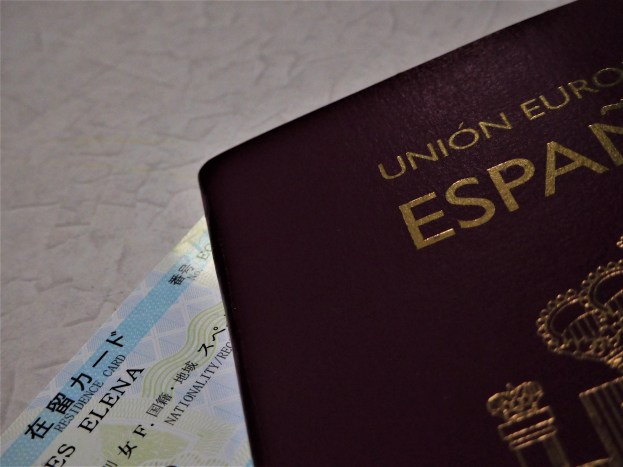
Es más fácil de lo que parece, aunque puede que tarden como una hora en realizar todo el trámite, así que ¡no vayas con prisas! 🙂
It is easier than it seems! Also, it may take one hour or a bit more at the city hall ‘though, so don’t be in a hurry! 🙂
Clases de japonés casi gratis / Japanese lessons for ‘free’
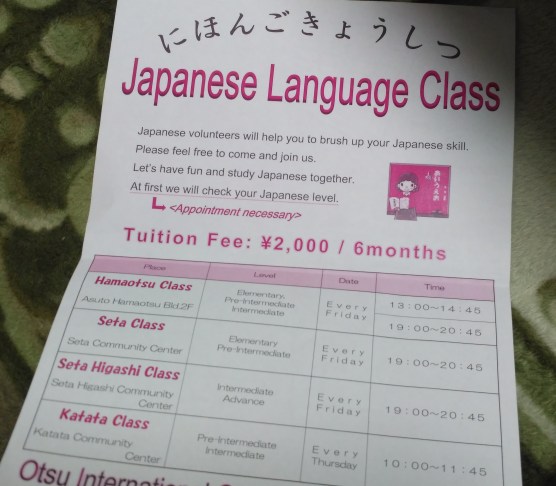
Y por último… Si quieres estudiar japonés mientras estás aquí en Japón y no quieres gastarte cientos de euros en clases, pregunta en tu ayuntamiento por las clases de japonés que ofrecen 🙂
Finally! If you want to study japanese during your stay in Japan but don’t want to spend so many yens on lessons, ask in your city hall about the ‘nihongo (Japanese) lessons’ that they offer 🙂
Suelen darlas voluntarios y por ello el precio es prácticamente ¡gratuito! Lo mismo te cuesta 20€ medio año, que lo mismo te cuesta solo 5€… ¡Tú pregunta!
They’re usually taught by volunteers and that is the reason why they are practically for free! Perhaps, they only cost 20$ per six months, or even just 5$… Just ask!
¡Mucha suerte en este otro lado del mundo!
Good luck on this side of the world!
じゃ, またね! (¡Hasta pronto! See ya!)
Quizás también te interese:
Japan Working Holiday (II): Cómo abrir una cuenta bancaria en Japón / How to open a bank account in Japan being a foreigner
 MI PROPIO ÍTACA